

I hope you enjoyed the FIFA World Cup 2026 as much as I did. It is amazing how exciting, dramatic and emotional it can be watching 22 grown men running after a ball, especially the penalty shoot-outs, which put so much responsibility on just a few players. I also enjoyed the FIFA Women’s World Cup when it was held in New Zealand and Australia in 2023 and was lucky enough to attend a few games at Eden Park in Auckland.
I’ve noticed, from watching the recent event, which was held in Canada, the United States and Mexico, that there is one FIFA rule for football players that could be useful in council meetings, following recent allegations of bullying.
I have no doubt the vast majority of councillors are respectful towards their colleagues, but at least a few are not. In this issue, we have a story about Auckland Councillors Christine Fletcher and Bo Burns, who both describe a toxic atmosphere at council meetings.
Christine, who was once the mayor of the city, says abuse has ramped up during this term. She says passions can run high but there is no excuse for that type of behaviour, which is normally associated with a school playground. Christine suggests bringing in a government observer.
In a Facebook post, she says one of her workmates insulted her under their breath but doesn’t specify who it was. Subsequently, a video has emerged of a March council meeting, where she repeats the abusive comment said to her off mic by a colleague.
Christine’s fellow councillor Bo Burns says she has walked out of council meetings where the behaviour and culture were unacceptable, adding that politics should never be an excuse for poor behaviour. She says democracy works best when people feel safe to contribute, not when fear, intimidation or hostility are used.
I agree.
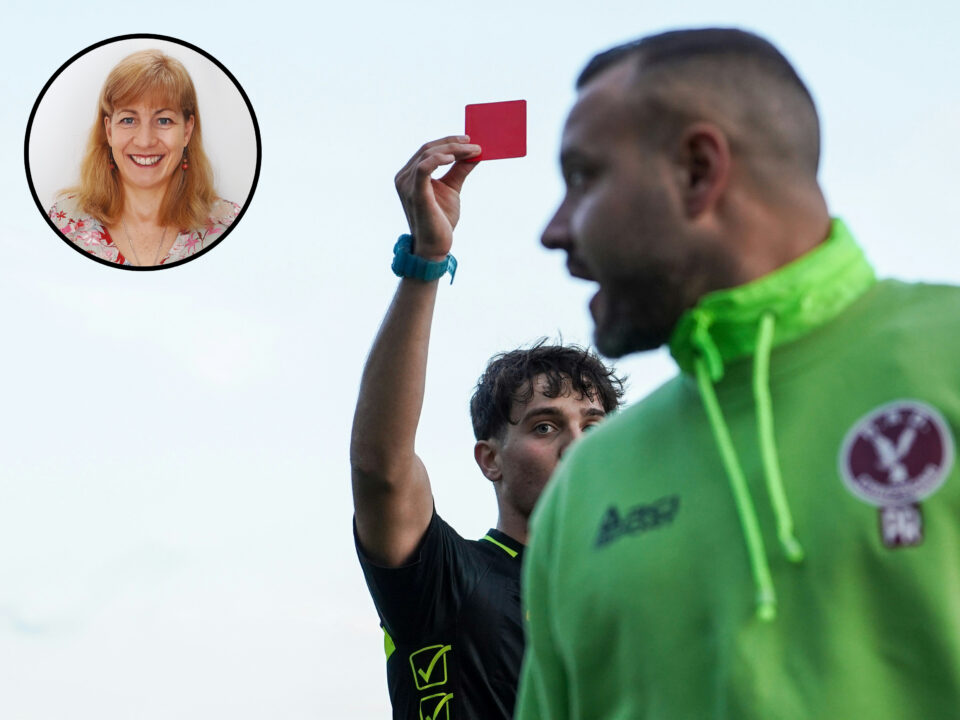
Going back to football, there is a rule in FIFA games that if a player covers their mouth during a confrontational situation, i.e. when there is argy-bargy between two teams, they are given an immediate red card. The inference is that the player covering their mouth during the face-off has said something insulting under their breath. The rule is meant to discourage discriminatory behaviour because covering your mouth makes it hard to prove what you said.
I propose a similar system for council meetings, where if a councillor says something off mic or under their breath, they receive an immediate red card. They are then excluded from the next important meeting and must forfeit their voting rights for a while.
If it keeps happening, they could be barred from seeking re-election. It is poor use of our hard-earned ratepayer dollars to be paying the salaries of councillors who behave in such a negative and destructive way, so they don’t deserve another chance to my mind.
Some kind of referee needs to be brought in to police this rule. Christine suggests a government observer. But Parliament has a Speaker, who’s voted in by their colleagues and I think councils should too. Someone needs to take control of this mess.
Who wants to go to work and be bullied? It is bad enough some councillors are subjected to bullying from their constituents, as seen in Southland recently, let alone from their colleagues.
Also in this issue, on page five Gwynn Compton from Local Aotearoa covers the wide-ranging changes facing local government at the moment. On pages 22–23, Datascape director John Wiggs says there is real pressure on local government right now, but there is also great opportunity, particularly when it comes to technology.
On pages 26–29 Kathleen Kinney from Boffa Miskell looks at an award-winning spatial plan in the Far North that used clever tools to get the public involved. The Last Word goes to local government academics Andy Asquith and Jeffrey McNeill, who share the three f’s of amalgamation.
Natasha Jojoa Burling
Editorial Manager