


This editorial has been updated to reflect the fact Tauranga City Council CEO Marty Grenfell resigned.
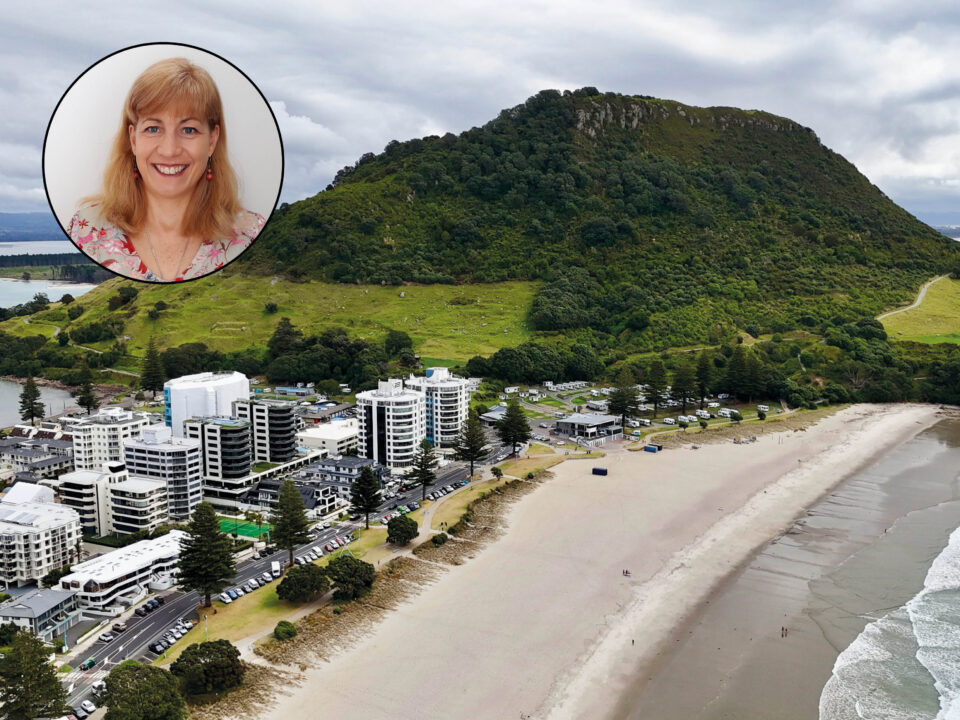
Council officials around the country should be scouring agendas, meeting minutes and other documents for any risks faced by their cities and towns in the wake of the fatal Mount Maunganui landslide. Six people, aged between 15 and 71, died on 22 January after a landslide came down into the Mount Maunganui Beachside Holiday Park, which is owned and operated the Tauranga City Council.
Paul Davison KC spent around six months examining the facts, timeline and decision-making processes leading up to the landslide, how good risk assessments and monitoring systems were and the lessons that could be learned to increase future safety.
The former High Court Judge found there was systemic failure within the Council leading up to the disaster and the tragedy was “preventable”.
“This was not a hazard that was unknown, hidden, or beyond the reach of foresight,” he says in his external report, which was commissioned by the Council.
“For more than two decades, one competent consultant after another identified the landslide hazard to the campground, located it on the very slope that failed, and explained, sometimes in stark terms, what the consequences of a landslide occurring could be.”
Yes, more than two decades – since 1999. Tragically that information, provided by competent consultants, was not put in front of the people who could have taken decisive action to prevent this needless loss of life.
Former Tauranga City Council leaders Stuart Crosby, Greg Brownless, Anne Tolley and Tenby Powell told the New Zealand Herald the warnings of landslide risks on Mount Maunganui never reached their desks and they don’t remember being told about the risks.
The risks of The Mount were due to be discussed on 6 August 2025 at a meeting of Ngā Poutiriao ō Mauao – a board made up of four Mauao Trust members and four Tauranga City Councillors. That meeting never happened because of concerns about quorum requirements i.e. not enough people for a proper vote.
On the agenda was an Operational Report containing a report by consultancy HD Geo, which had done “Mauao rock stability monitoring”.
The report said there was a high risk to life from rockfall around the campground. It was given to Deputy Mayor Jen Scoular and councillors Hemi Rolleston, Rod Taylor and Hautapu Baker but none read it because the meeting was cancelled. For some reason it wasn’t discussed at the following meeting, which Jen says was “very strange”.
I can understand, with the huge volume of agenda and report pages councillors have to read through, why the Deputy Mayor and Councillors would have put that report on the risks of the maunga to one side until they really needed to read it.
What was at fault was the system. Why was this report about life-threatening risk only going to be presented at small board meeting, rather than the Council’s Governing Body? We can’t rely on common sense to help people realise the gravity of a report like this; Council officials should have training about when a report warrants elevating to the highest level of a Council.
Mayor’s Office Manager Gareth Green, who used to be the CEO at New Plymouth District Council and Taupō District Council, became the Acting Chief Executive on 5 October, less than a week after Council Chief Executive Marty Grenfell resigned.
There had been calls from the Mount Maunganui Ratepayers Association to resign but Marty previously told Ryan Bridge TODAY: “I’ve been involved with this organisation for eight years, I know it better than anybody. I’m best placed to drive the changes that Mr Davison has highlighted.”
Marty said the fact he didn’t know about reports warning of the risks of the maunga was a “systems issue”. “The systems have been in place for a long time, we test these obviously – we failed in this situation.”
He said the risk register of the city was “wide and comprehensive”, including multiple hazards like the airport, water treatment plants, wastewater plants, buildings, equipment and roads. However, the Council employs just one natural hazards staff member. Marty said that part of the organisation would need to be bolstered.
I agree. One person keeping tabs on the hazards in a city of 160,000 does not seem many. It’s also a heavy responsibility for that one person, without anyone else to discuss concerns with or to keep them accountable.
All councils around the country need to look at how many staff are devoted to risk management and, based on Tauranga City Council’s experience, probably increase that.
Marty says Paul’s report is “accurate, it’s damning and it’s confronting”. “We can’t leave risk management up to chance or subjective decision-making, it needs to be supported by… robust systems within the organisation.”
“No words or actions are going to bring back the loved ones or bring closures to the families all we can do is make sure that we pout systems in place and develop the organisation in such a way that something like this won’t happen again.”
The Council says it’s taken action to strengthen oversight and reduce risk since the tragedy, including assessing landslide risks at council-controlled sites, introducing Trigger Action Response Plans and severe weather controls for higher-risk locations, strengthening executive accountability for risk management, enhancing Audit and Risk Committee oversight and conducting a comprehensive review of historical records.
It has looked at 21,000 council records from the last four years, with 479 possibly relevant documents pinpointed over around 120 projects. Twenty-three high-priority records have been examined in detail, but no new or previously unknown risks to life have been found. Councils around New Zealand need to be doing similar things right now; looking through any records relating to risks and examining them to see if anything needs to be done.
In a press release, Marty says for meaningful change to happen, there will have to be improvements to systems and processes, but also to organisational culture.
“We need systems that ensure risks to life are identified, recorded, owned and escalated consistently, and we need a culture where people feel responsible for raising concerns early and taking action.”
I agree. Every council needs to put systems in place to make sure fatal risks are “identified, recorded, owned and escalated consistently”. People need to be comfortable saying, “This could be a problem, let’s do something about it.”
Tauranga Mayor Mahé Drysdale says he and his councillors are committed to ensuring the organisation learns from the findings and makes significant improvements to its risk management performance.
“We have demanded change from the organisation with a clear expectation that the recommendations made by Mr Davison will be implemented.
“We have instructed the Chief Executive to provide us with a detailed plan outlining exactly how he and the Executive Team will improve risk management processes, and how systems and organisational practices will be strengthened.”
Local Government Minister Simon Watts has written to councils around the country following the report, which he describes as “damning”.
“I have an expectation that they are taking on board the learnings and lessons from the Tauranga report back and will be seeking advice in regard to whether those gaps that had existed in Tauranga exist in other parts of the country.”
It’s a tough ask when councils are already stretched with things such as discussing amalgamation options, creating new water entities, rates capping, being told to get back to the basics etc. But it must be done.
Natasha Jojoa Burling
Editorial Manager