
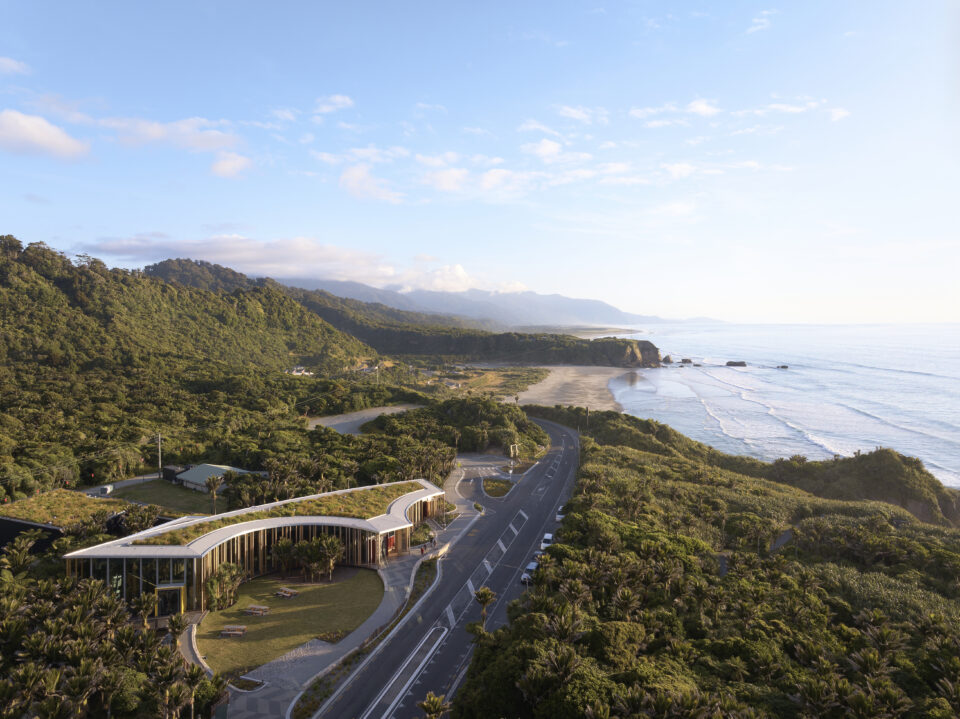

The Dolomite Point Redevelopment and Punangairi Visitor Centre are lessons in the way collaboration turned a well-visited coastal area into a national showcase of local conservation, cultural insight, and thoughtful development. Article by Kathleen Kinney, Boffa Miskell.
On our West Coast, Dolomite Point has long been a postcard-perfect stop for travellers.
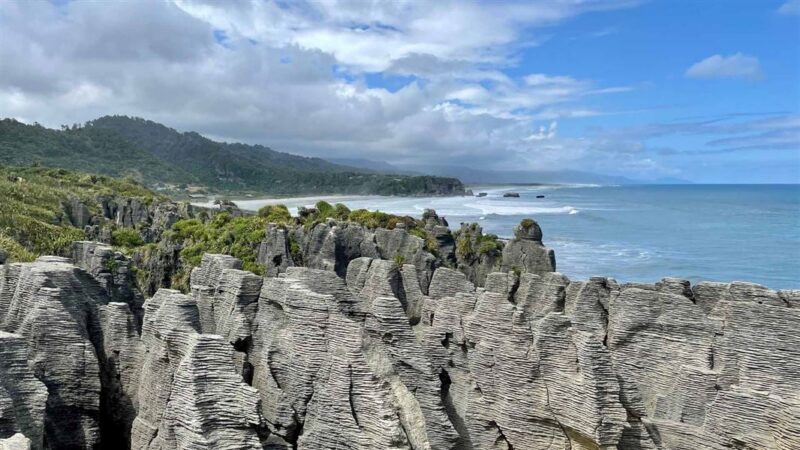
The Pancake Rocks draw nearly half a million visitors each year. Yet for decades, Punakaiki was a paradox: world-class scenery paired with underwhelming infrastructure. Visitors came, snapped photos, and left. The local community saw little benefit, and the fragile environment bore the brunt of unmanaged tourism.
By 2016, the cracks were showing. Coastal erosion threatened homes and State Highway 6; wastewater systems were outdated; and freedom camping was straining local services. The opening of the Paparoa Track promised even more visitors. For Buller District Council and its regional partners, the question was clear: how do you protect a globally significant landscape, support a small community, and harness tourism for good?
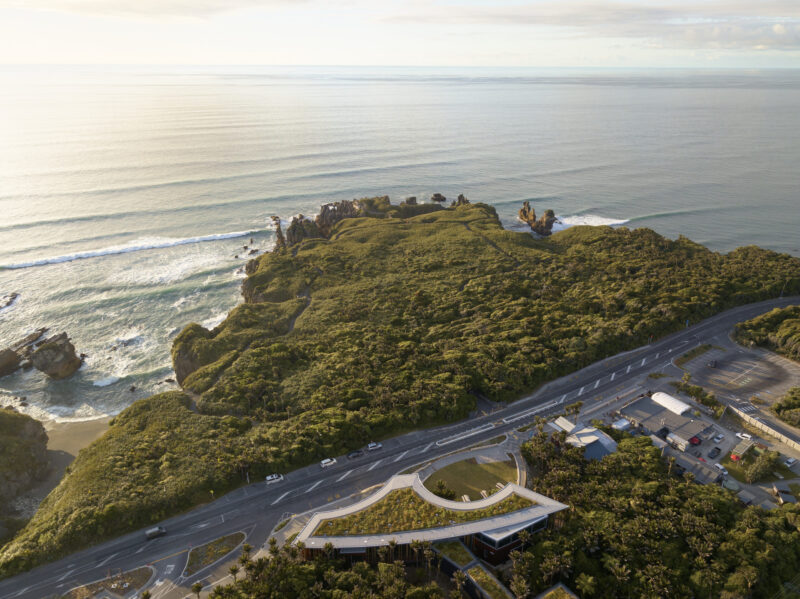
The answer began with a shared vision to “deliver a sustainable, resilient Punakaiki community and a world-class visitor experience” as expressed in the Greater Punakaiki Community Masterplan, commissioned by Buller District Council in 2018.
The masterplan mapped out upgrades and aspirations: from safer roads and pedestrian links to managed retreat from flood-prone areas. It tackled water supply, wastewater, and even postal services. And crucially, it aligned with the Department of Conservation’s existing ambition to redevelop Dolomite Point from a roadside stop into a destination that celebrated nature and culture.
The Dolomite Point Redevelopment Opportunity Study (2016–2019) had been commissioned by the Department of Conservation to explore the potential for redeveloping Dolomite Point into a compelling visitor destination and gateway to the Pancake Rocks and Paparoa National Park. Boffa Miskell assisted in preparing an application for provincial growth funding to develop a concept masterplan.
The Dolomite Point Redevelopment Opportunity Study established the foundational vision and objectives for future redevelopment, including securing infrastructure, enhancing visitor experience, and integrating cultural narratives.
The Greater Punakaiki Community Masterplan and Programme Business Case (2018) commissioned by Buller District Council provided a strategic framework for long-term planning and funding, integrating community aspirations with infrastructure and environmental needs.
As lead planning consultant, Boffa Miskell took responsibility for project management, high-level site analysis, option development material, coordination and facilitation of design workshops and development of a preferred masterplan. The project deliverables assisted in the long-term planning and design, along with establishing the framework to secure funding for the future development and infrastructure needs of the greater Punakaiki community.
Subsequent to the Department of Conservation successfully applying for funding from the Provincial Growth Fund to construct and deliver the Dolomite Point Redevelopment Project (DPRP), Boffa Miskell planners provided strategic advice and project management for the consenting process as well as providing a full range of technical inputs to the consenting documentation.
Dolomite Point/Punakaiki Environmental Investigations and Approvals (2019–2022) included ecological and landscape assessments and reporting, a cultural impact assessment, resource consent applications, and ongoing collaboration with local Ngati Waewae to embed cultural values throughout the redeveloped site.
Resource consents were successfully obtained in 2021 and preparation for the construction of the Punangairi Visitor Centre commenced immediately.
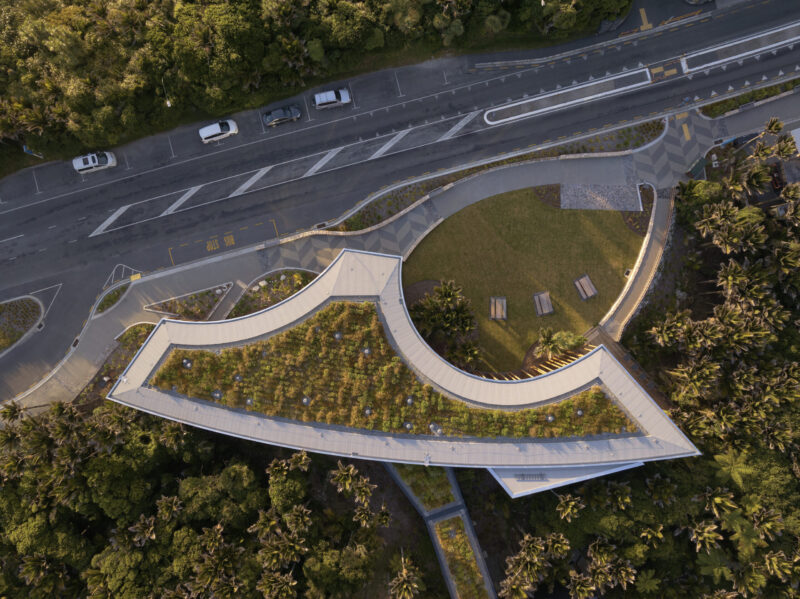
Now, at the gateway to the Pancake Rocks and Paparoa National Park, the award-winning Punangairi Visitor Centre sits the heart of the redevelopment, as the most visible outcome. At a cost of $25.6 million from the Provincial Growth Fund, it will host 450,000 visitors every year.
The striking, multi-purpose building by architects Sheppard & Rout tells the story of the land and its people, offers modern amenities, and reflects the unique character of the West Coast. It’s a place for tourists to linger, learn, and connect.
For locals, it’s an economic catalyst, creating jobs and encouraging longer stays. The wider environment benefits, too. Thoughtful planning practice and a strong environmental conscience underpinned every phase. Rigorous ecological assessments helped protect the area’s diverse native flora and fauna, including kiwi and bats.
One standout legacy, responding to a novel circumstance, was the response to juvenile petrel disorientation from existing artificial lighting. In partnership with the Transport Agency seasonal highway lighting is now switched off, and low-level, bird-safe lighting was installed.
The Buller District Council, Grey District Council, West Coast Regional Council, Transport Agency, Development West Coast, the local community and Ngati Waewae (which now has a platform for cultural storytelling and future economic opportunities) all played pivotal roles in this success.
The Boffa Miskell team managed the complex consenting process, facilitated design workshops, and delivered the integrated planning that made multi-agency collaboration possible.
Punakaiki is more than an upgraded visitor destination. It’s a model of what local and regional government can achieve through partnership, foresight, and courage, and proves that collaboration can bring success, rather than compromise.
Shared lessons
The Dolomite Point|Punakaiki project offers powerful lessons for other regions.
- Start with a shared vision: balancing the needs of community, environment, and economy.
- Integrate planning and funding early: a robust business case unlocked national investment.
- Embed cultural values from the outset, not as an afterthought.
- Plan for weather-climate resilience: including managed retreat and hazard mitigation.
- Collaborate across boundaries: district, regional, and central agencies working as one.
- Balance tourism with community needs: ensuring that growth strengthens rather than strains local life.
Awards
- Merit Award|Tourism and Leisure | PCNZ Rider Levett Bucknall Property Awards.
- Public Architecture|NZIA Nelson & Marlborough Architecture Awards.
- Special Award|New Zealand Commercial Project Awards.
- Gold Award – Tourism & Leisure|New Zealand Commercial Project Awards.