
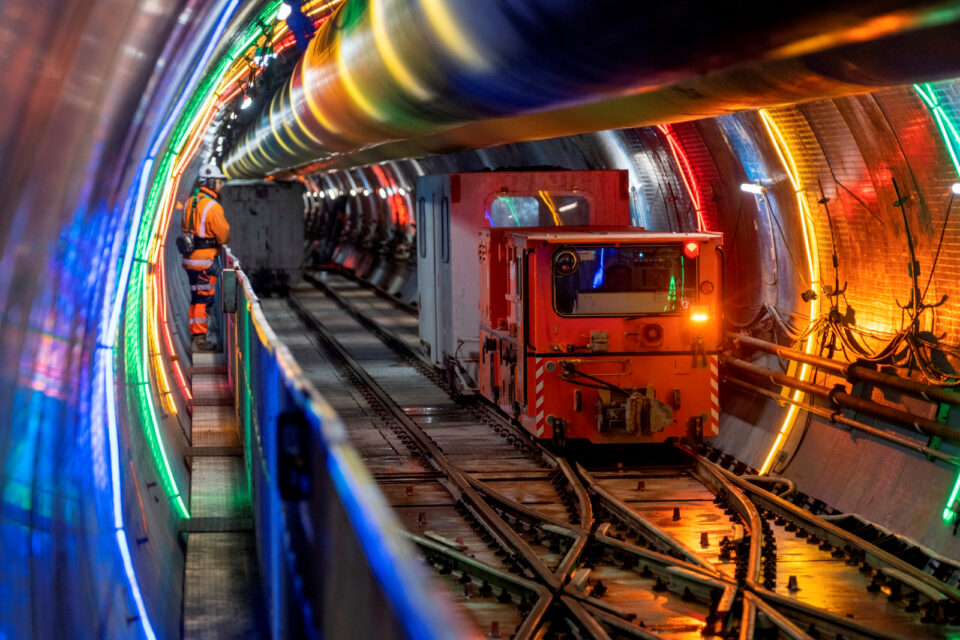

An Auckland sewer tunnel earned two awards at this year’s CCNZ Hirepool Construction Excellence Awards, which were presented on 14 August as part of the Civil Contractors Conference in Wellington. This article is based on an award-winning entry to the 2026 Civil Contractors New Zealand Hirepool Construction Excellence Awards.
Ghella Abergeldie Joint Venture (GAJV) was the winner in category five – for projects greater than $100 million – for main works projects on the 16.2 kilometre Central Interceptor, which is designed to reduce wastewater and sewage overflows into waterways by 80 percent. The project, which started in 2019 and was finished in July 2026, cost $1.3 billion, and came in $100 million over budget.
Seipp Construction won category three – for projects worth between $5 million and $20 million – for its work on the CI’s confluence chamber, where different pipelines merge into the main tunnel, at the Māngere Wastewater Treatment Plant in South Auckland. That project cost $17.2 million and the client was GAJV.
The 4.5-metre diameter CI runs from Point Erin in Herne Bay to Māngere. It is 15 to 110 metres below ground, goes underneath the Manukau Harbour and links to sewers in Mount Roskill, Blockhouse Bay and Mt Albert.
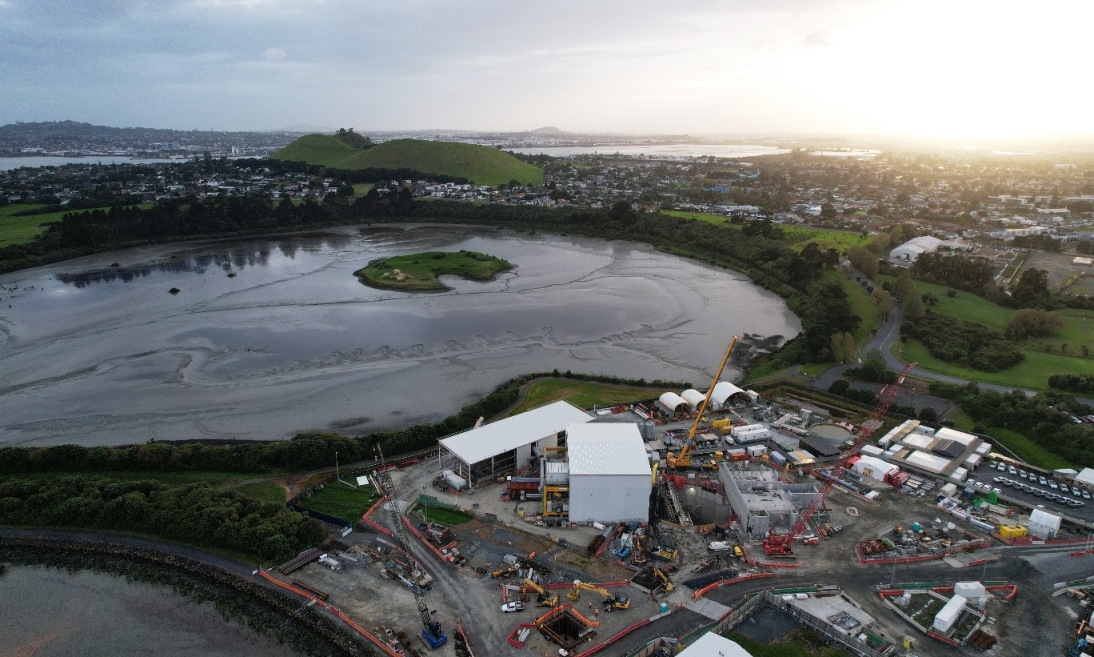
The project was a collaboration between Watercare, the GAJV and Auckland Council, with input from mana whenua and local communities.
The award finalist book describes it as “a remarkable feat of civil engineering”.
“More than an engineering achievement, the Central Interceptor has set new benchmarks for safety, sustainability, workforce development, cultural partnership and community engagement.
“The project is a spectacular example of how major civil infrastructure can deliver project success alongside an enduring legacy of positive environmental, social and technical outcomes for future generations.”
Unprecedented complexity
GAJV’s entry says the CI is one of the most significant infrastructure investments ever undertaken in New Zealand, “fundamentally reshaping Auckland’s wastewater network to improve environmental outcomes and support long-term urban growth”.
The joint venture entered the project because it represents “an unprecedented scale of engineering complexity delivered in a dense urban environment, under live network conditions, over a multi-year [seven and a half year] programme”.
“The project has required sustained excellence in planning, risk management, health and safety, stakeholder engagement and environmental stewardship.”
GAJV said the CI should win because it was a “tremendously successful” major civil works project, particularly since it was delivered under a “hard money” lump sum contract.
The project was also shaping the future of this country’s biggest city and shows how complex tunnelling and civil works delivered deep beneath a major city can achieve enduring “environmental, social and technical outcomes when innovation, collaboration and long-term thinking are embedded throughout delivery”.
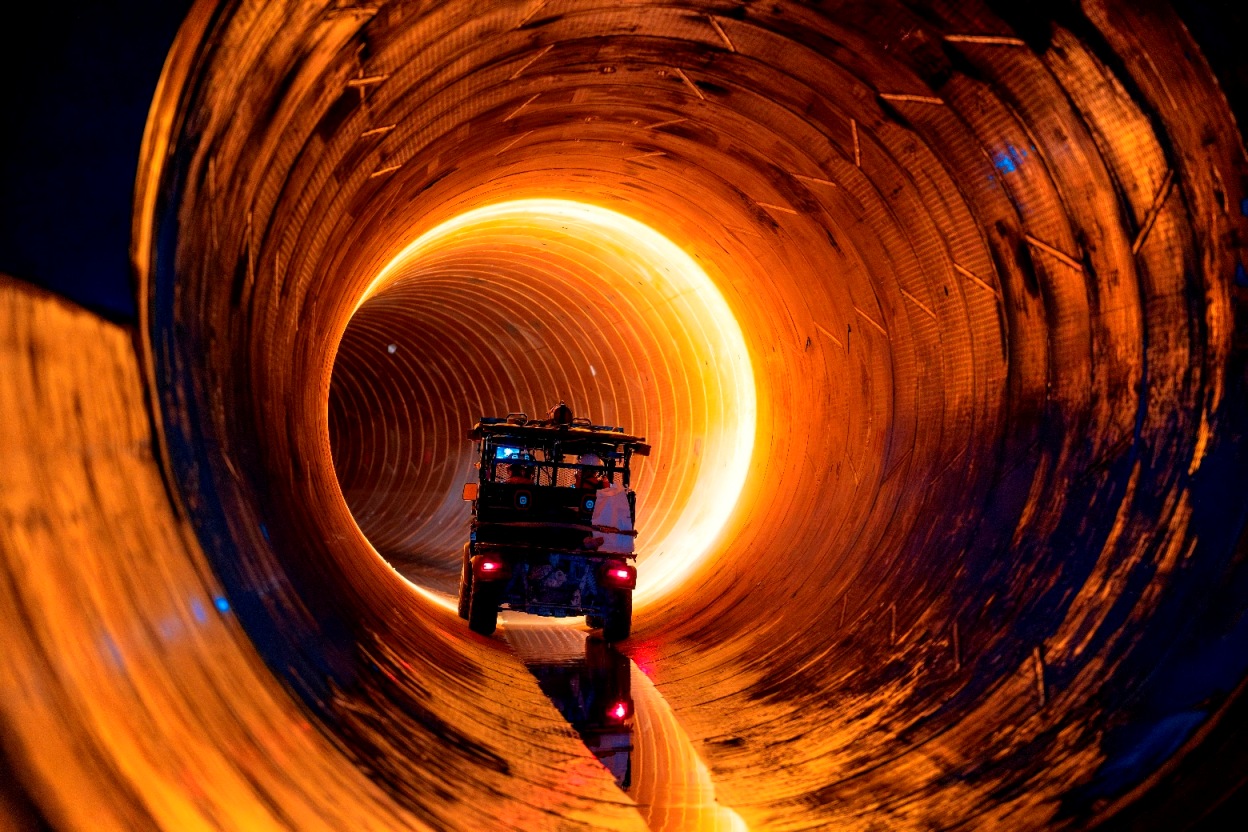
The CI was “one of New Zealand’s most complex underground infrastructure projects” built in highly variable volcanic and sedimentary geology, including changing ground conditions, groundwater pressures and volcanic rock formations. That included tree trunks in peat underneath State Highway 20, which the TBM had to break its way through.
Works were done at up to 17 active construction sites operating simultaneously, which required coordination of different construction methods, including a 192-metre-long earth pressure balance tunnel boring machine (EPB TBM) tunnelling, microtunnelling, pipejacking and conventional excavation.
“Interfaces between tunnelling, shaft works, live network connections and surface environments were managed while maintaining service continuity.”
High-risk tunnelling
The Manukau Harbour crossing was one of the project’s highest-risk tunnelling environments. Constructed 15 metres under the seabed in mixed ground conditions, and 10 metres away from high voltage power pylons, it required continuous EPB TBM operations, advanced pressure management and tightly controlled underground monitoring systems to safely manage marine ground conditions, groundwater pressures and environmental protection risks beneath a critical harbour environment.
Tunnel lining systems were designed for changing geological conditions encountered by the TBM and the segments were different colours to show they were different designs.
Grappling with a pandemic
Watercare and GAJV countered the Covid-19 risk by moving the manufacturing of the tunnel boring machine from Southern China to Herrenknecht’s German factory.
They also put measures in place to attract and retain international staff, such as securing places in managed isolation and quarantine (MIQ) and helping bring overseas workers’ families to New Zealand.
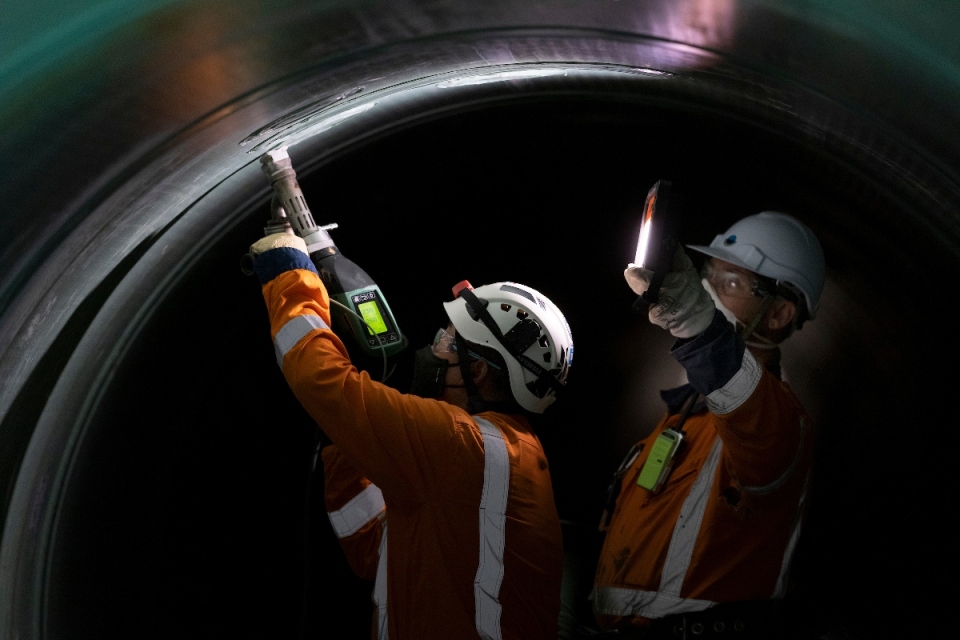
Tunnel segment production started well ahead of the TBM launch, with precast segments manufactured, tracked and installed under strict quality controls. Permanent tunnel linings consisted of universal precast concrete rings, each made up of six segments, 324 millimetres thick and 1.6 metres long. An internal polyethylene liner provided corrosion protection for at least 100 years.
The CI has shafts up to 78 metres deep, which needed extensive temporary works, diaphragm walls, dewatering systems and engineered excavation support and monitoring systems to safely manage ground stability and groundwater pressures during construction.
Keeping within budget
GAJV put robust financial management systems in place to manage the delivery of the programme over multiple sites and work packages. Value engineering and constructability reviews were done during planning and mobilisation to optimise delivery and minimise unnecessary temporary works and disruption. These continued to the end of construction, showing the joint venture’s commitment to construction excellence.
Hitting the target
“Driving a TBM deep underground is complicated and difficult, like driving a car in fog and complete darkness,” says GAJV. To combat that, three-dimensional scanning of shafts and tunnels was put in place to verify dimensional accuracy, progress and lining quality in the tunnel.
Advances in technology and techniques, including cutting-edge X-Ray technology, enabled the surveying team to ensure “incredibly accurate” measurements and predictions as the TBM travelled underground from Māngere to Point Erin, arriving within millimetres of its target at breakthrough.
Aim of zero deaths
GAJV gave 4,293 two-day inductions and carried out 90,020 hours of training at a purpose-built facility in Māngere. The courses covered underground hazards, environmental controls, road safety, confined spaces, suspended loads and operational procedures.
“Both Watercare and GAJV were committed to providing an environment of zero fatalities and no serious harm.”
Across the life of the project, 48 summer interns (30 male, 18 female) and 35 graduates (23 male, 12 female) worked on the CI.
Going green
There were many environmental initiatives, such as using Oceania’s first hybrid concrete pump, which poured a biofilter slab at Māngere Pump Station, saving 165 litres of diesel and 423 kilograms of carbon while reducing noise.
Electric locomotives, TBMs, gantry cranes and sites were connected to mains power, which reduced emissions by lowering diesel use. Three electric tipper trucks – also an NZ first – hauled 54,828 tonnes of spoil, saving 108,533 litres of diesel.
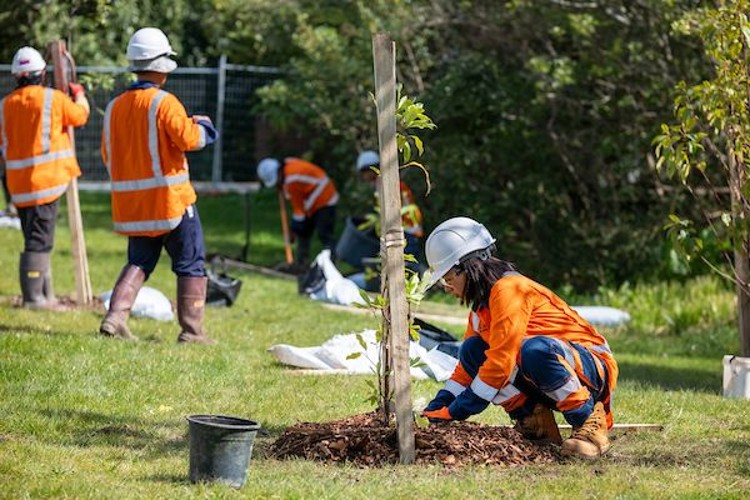
Spoil was reused at nearby Puketutu Island, which diverted it from landfill, prevented thousands of truck journeys and delivered significant fuel savings. Ecological measures included replacing trees two-to-one and relocating endangered native skinks, eels and rare aquatic moss. The project recycled hard hats to make 50 tabletops at Manurewa High School.
“By reducing overflows, protecting the harbour, and creating resilient green spaces, the Central Interceptor sets a benchmark for environmentally responsible engineering.”
Keeping productivity high
Despite pandemic disruptions, complex ground conditions and multiple work sites, productivity stayed strong through integrated planning, adaptive sequencing and continuous operational optimisation. An example was the excavation of the Dundale shaft in Blockhouse Bay which was done two weeks early and in the project’s most productive month; 686.3 metres was excavated and 429 rings were installed in July 2024.
Setting new benchmarks
GAJV used innovative and sustainable construction methods such as the single pass segmental lining method, an NZ first. Each tunnel segment was pre-lined with polyethylene, reducing works and accelerating the programme by one and a half years, and removing health and safety risks from re-entering the tunnel.
“Collectively, these (and other) measures enabled the Central Interceptor to safely and efficiently deliver one of the largest and most technically demanding sewer tunnelling projects undertaken in New Zealand, while setting new benchmarks for underground infrastructure delivery, workforce capability and sustainable construction practices.”
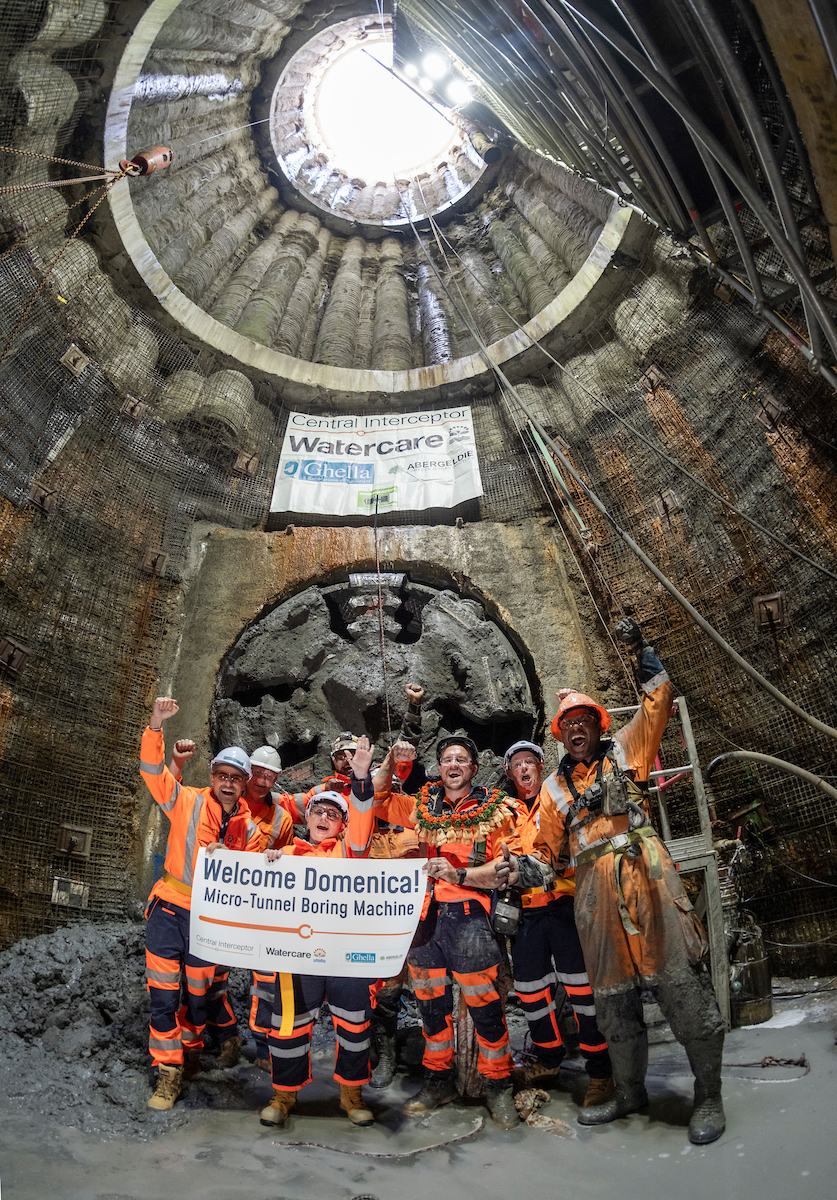
The project directly employed 600 people of 32 nationalities. Regular cross-disciplinary coordination ensured tunnelling, shaft construction, mechanical, electrical and network works progressed safely and efficiently, particularly at important interfaces where several work fronts overlapped. The project fostered strong collaboration between office-based and field-based teams, ensuring decisions reflected technical requirements and on-site realities.
At the commissioning of the southern section of the tunnel, Watercare Chief Programme Delivery Officer Shayne Cunis said: “This is a huge result.
“It is rare both globally and in New Zealand for major infrastructure projects to be delivered safely, economically and on time.”
Watercare also publicly recognised the role of the construction team, saying: “We are hugely proud of the tenacity and dedication of our team, in particular our construction partners Ghella Abergeldie JV.”
Tsunami of change for local government