
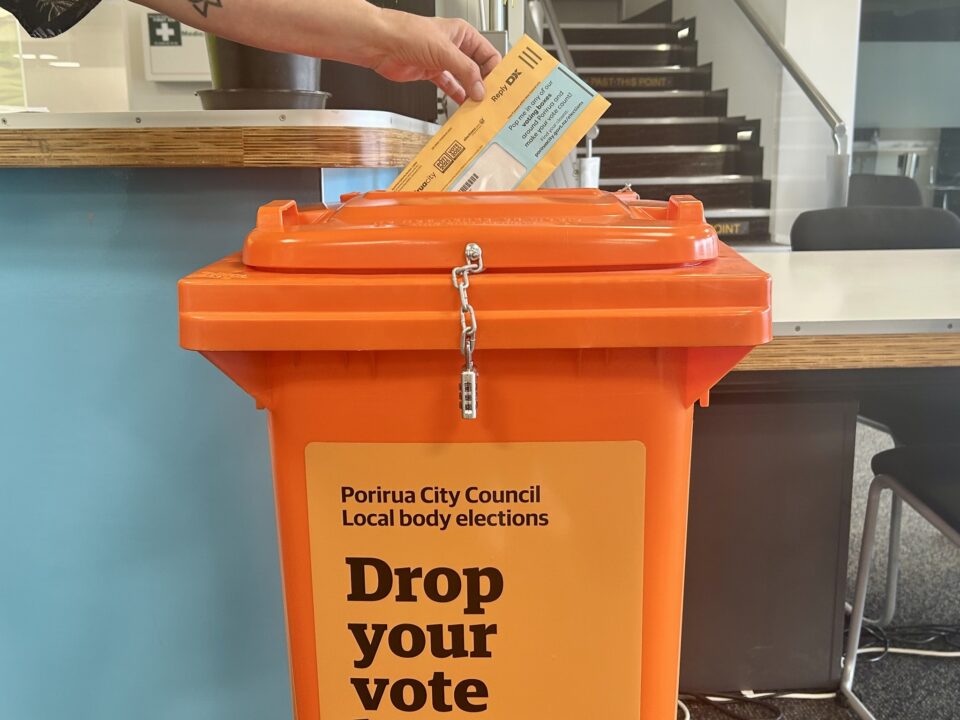

Local Government in our new Aotearoa is only ‘local democracy’ in theory and not in reality, reflected in the small percentage of eligible voters who decided last month who will be running our 77 councils over the next three years.
Ironically, the voting period for this election was extended from 22 days to 32 days to encourage more participation; ballot boxes were readily available; and council PR teams went into overdrive, wasting resources on public campaigns urging people to vote up to the eleventh hour.
Since the 1989 reform of local government, apathy has seen voter turnout decline – from 42 per cent in the last elections in 2022 to just 33 per cent this time. Regional councils with smaller populations attracted higher voter turnout, with three in the high 50% turnout, and 15 councils with over 50%. Some had a small increase over 2022, such as Central Hawke’s Bay (56% voter turnout), up from 44% in 2022.
An exception to low voting in major centres was Wellington, where turnout was almost 46 per cent (nearly 12% cast on the final day). In contrast, Auckland, also a media target for controversy, slumped to 29.3% from 35.5 in 2022. Hamilton City Council voter turnout increased from 29.4 percent in 2022 to 33 percent in 2025, a proportional rise of 12.24 percent (see comment at the bottom of the story).
The media blamed voter apathy on councils getting offside with those they represented – who then ‘protested’ with indifference. The LGNZ association, as usual, blamed the mechanics of the electoral process, especially postal voting (almost half of the special votes in Auckland were cocked up), and trumpeted its long-standing proposal to bring in the Electoral Commission to run elections and replace voting by mail with in-person polling booth voting.
In the end, our country is just experiencing similar LG election apathy to Australia (in those states where it is not compulsory) and the UK where turnout has failed to reach 30 per cent in half of the 27 Mayoral Combined Authorities elections that have taken place since 2017.
Highlights
Some 3500 candidates stood for 1500 positions at 77 city, district, regional and unitary councils. Tauranga City Council had agreed to a special four-year term. Over 200 candidates were elected unopposed, including Hurunui’s incumbent mayor Marie Black and new Manawatu mayor Michael Ford.
Sixteen of our 67 mayors around the country didn’t seek re-election, including in Wellington, Hamilton, Lower Hutt, New Plymouth, Hastings and Invercargill. Among the other mayoral seats, half lost their roles. Prominent casualties included Selwyn’s three-term mayor Sam Broughton (LGNZ President). Of the 11 mayors on the LGNZ National Council, three retired and four lost their seats. Other casualties were Kirsten Wise in Napier; Glyn Lewers in Queenstown; one-term Dunedin mayor Jules Radich (LGNZ Metro Chair); nine-term mayor of Upper Hutt, Wayne Guppy; Central Hawke’s Bay mayor Alex Walker, (Chair of LGNZ’s rural sector); and Whangarei mayor Vince Cocurullo. Had Guppy won a ninth term, he would have been on par with Gisborne mayor Harry Barker, who served for 27 years (1950s to 1970s). The election marked the first time since 2013 that an incumbent mayor was defeated in a Hawke’s Bay mayoral race. Wairoa Mayor Craig Little (voted in 2013) was the only mayor to retain his role in the region.
Media interest pointed out these vanquished mayors had all presided over steep rates increases, with 13 of the 18 councils that imposed double-digit rate hikes (12.6 per cent and above), this year having their mayors voted out of office. And among the top 20 highest increases (9.9% plus) only five mayors were voted back. Of the 10 councils with the smallest rate hikes (5.8% and below), seven mayors were re-elected.
Among the mayoral winners was Auckland media-magnet Wayne Brown, who was voted in for a second term by just 54 per cent of Auckland’s 29 per cent voter turnout, to continue his battle with his own transport management and central Government over who knows best about urban design. “They need to let us have the ability to make our own decisions,” he says about central Government and adding, “I’m looking forward to getting my hands on AT. It’s taken me three years. The most important thing now is to take full advantage of taking control of Auckland Transport.”
Ex-Labour Party MP Andrew Little led and won a high-profile mayoral race in Wellington and is now in control of a council with Labour and Green Party councillors in 10 of the 16 council seats. “Under my leadership Wellingtonians can expect a council that is solely focused on what’s best for the city,” says Little.
Replacing the capable Paula Southgate, who retired this year as Hamilton mayor, is Tim Macindoe a former National MP. Embattled Gore mayor Ben Bell, Porirua mayor Anita Baker, Nick Smith (Nelson), Tania Tapsell (Rotorua), and Faylene Tunui (Kawerau’s) were all comfortably returned to office.
Sophie Barker (of Larnach Castle fame) has become the second woman to lead Dunedin city and was deputy mayor before resigning after clashing with Mayor Jules Radich. Phil Mauger was re-elected as Christchurch’s mayor for his third term, and Whanganui re-elected Andrew Tripe as mayor for his second term.
A margin of just 55 votes saw incumbent Mayor Craig Rowley secure his fifth successive term in the Waimate district, while Hastings had a voter return of almost 45% with Wendy Schollum becoming its new mayor. Janet Holborow has been re-elected for a second term as mayor of the Kapiti Coast District, and Mayor Rehette Stoltz was re-elected as Gisborne mayor for a third term.
Maori wards
Forty two councils asked voters to decide on keeping or abolishing their new Maori wards – with the result that 25 lost their wards. (Currently elected councillors will serve until 2028, but the wards will cease to exist after that.) Kaipara and Upper Hutt voted to remove theirs ahead of the local elections. Voters in 17 councils agreed to keep them.
Maori wards and constituencies were enabled under an amendment to the Local Electoral Act 2001, but if five per cent of residents disagreed with the decision they could trigger a binding referendum to overturn it. Over the next 20 years, only three councils were successful in setting up such ward or constituency, until the last Labour Government removed the five per cent provision encouraging a flood of Maori wards. A July 2024 law change required councils that had established wards without a prior referendum to put the decision to voters in a binding poll.
Wards to be disestablished
- Hawkes Bay Regional Council
- Horizons Regional Council
- Northland Regional Council
- Taranaki Regional Council
- Central Hawke’s Bay District Council
- Hauraki District Council
- Hastings District Council
- Horowhenua District Council
- Marlborough District Council
- Manawatu District Council
- Masterton District Council
- Matamata-Piako District Council
- Napier City Council
- New Plymouth District Council
- Otorohanga District Council
- Rangitikei District Council
- South Taranaki District Council
- Stratford District Council
- Tararua District Council
- Tasman District Council
- Taupo District Council
- Thames-Coromandel District Council
- Waikato District Council
- Waipa District Council
- Whangarei District Council
Confirmed wards
- Greater Wellington Regional Council
- Far North District Council
- Gisborne District Council
- Hamilton City Council
- Hutt City Council
- Kapiti Coast District Council
- Kawerau District Council
- Nelson City Council
- Palmerston North City Council
- Porirua City Council
- Rotorua District Council
- Ruapehu District Council
- South Wairarapa District Council
- Whakatane District Council
- Whanganui District Council
- Wellington City Council
- Western Bay of Plenty District Council
An earlier version of this story incorrectly said Hamilton City only drew 23 percent of voters, which was based on news sources post the LG elections. The Council informed us on November 27 that Hamilton’s voter turnout had actually increased from 29.4 percent in 2022 to 33 percent in 2025, a proportional rise of 12.24 percent.