
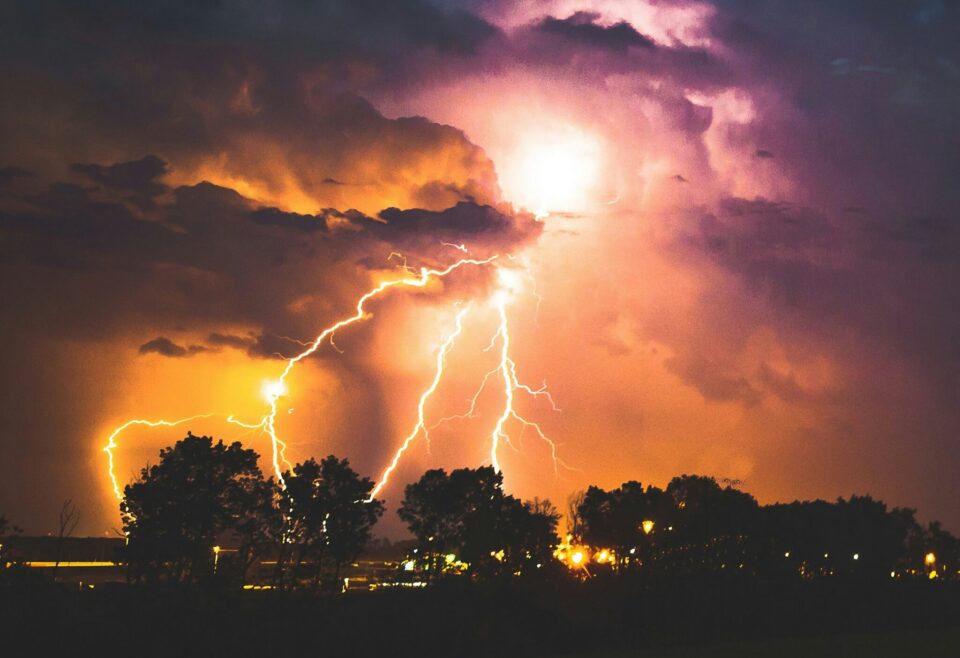

Linda O’Reilly, Special Counsel at Tompkins Wake, spent much of the Christmas/New Year break doomscrolling and weather watching and came up with this perspective on 2026.
I found myself relentlessly logging on to Substack and YouTube for my fix of US politics and monitoring the new weather station that I gifted to my partner for Christmas.
Neither of these occupations returned positive rewards, and certainly not the hoped for calm uplift as we headed into the new year.
But, putting aside the existential threats to our continued existence posed by the breakdown of world order and climate change, how will local government fare in 2026?
There is no answer to that question.
First, because it depends on what one wants or expects from local government. A ‘good’ outcome depends on whether you think the focus should be on core infrastructure and minimal rates, on self-governance directed from bottom to top, or on maintaining and expanding a range of community infrastructure and services that nourish communities.
Or, some mix of these outcomes that are, in any case, not necessarily mutually exclusive.
Second, because it is almost impossible to predict the outcome of current legal and policy changes, or whether they will even survive the general election later this year.
Remember neither Three Waters nor the repeal of the Resource Management Act survived the last change of government.
A further underlying uncertainty is the ability of existing, and future units of local government, to cope with the sheer logistics of the changes faced.
Just to remind ourselves what local government is facing: A new regime for the provision of water services will fundamentally change the operational model of virtually all territorial authorities, regardless of the delivery mode adopted. With all Water Service Delivery Plans now submitted, the implementation phase is underway with the funding and financial pathways to be put in place to demonstrate financial sustainability by 30 June 2028.
The (second) repeal of the Resource Management Act 1991 (RMA) and new planning and environmental legislation. The replacement Planning Act and the Natural Environment Act are expected to be passed midway through this year introducing combined regional plans and nationally standardised land-use zones.
We face major changes to the powers and responsibilities of regional councils under the Simplifying Local Government proposal, including replacement of elected members with a Combined Territories Boad (CTB) and a restricted role in land use planning.
These changes will occur in parallel with the repeal and replacement of the RMA. Each CTB must produce a Regional Reorganisation Plan within two years, recommending shared services, joint CCOs, amalgamations, or other models for more efficient delivery.
Plans will be subject to consultation and require ministerial approval.
A national cap on council rate increases with a target range of between two and four per cent based on economic indicators. The cap will apply to all types of rates but exclude water charges and other user fees and charges.
Permission to exceed the rate cap can be sought from an independent regulator to be appointed by the government. Although the transition period does not begin until 1 January 2027 and enforcement until 1 July 2029, councils have been warned by Local Government Minister Simon Watts not to wait for full enactment of the rates-capping model before applying the target. Many councils are already struggling to apply the rates cap as they prepare their 2026 / 2027 annual plans.
Amendments to the Infrastructure Funding and Financing Act 2020 to broaden the eligible projects including NZTA/KiwiRail works and water infrastructure under new water organisations, and to replace development contributions with a development levies system. Legislation to give effect to the latter is expected to be introduced in May this year with the transition period for the introduction of development levies beginning July 2028 and extending until July 2030.
The refocus of the statutory purpose of local government under the Local Government (System Improvements) Amendment Bill from the four well-beings toward core services and cost-effective delivery. Of course, local government is familiar with this particular sleight of hand, because it has occurred with virtually every change to a National-led government and then been reversed by every Labour-led government since the Local Government Act came into force.
Meantime, we press on
All of this is set against the normal administrative, regulatory, and operational functions of local government which must continue, while at the same time addressing matters relevant to new policies and legislation.
This includes addressing the demands of central government for information, liaising with other local authorities and their communities, and determining and preparing submissions.
These changes would always have been a logistics nightmare, but January and the new year brought with it extreme weather in the Bay of Plenty, Gisborne, Auckland, and Northland that unleashed flooding and landslips with major property damage and loss of lives in several locations.
Now there are calls for better management of the risks of extreme weather events, better emergency management control, better predictive modelling of risk, and regulation of land use. Not to mention an independent inquiry (perhaps council run, perhaps government run, perhaps two inquiries) into the landslip at Mt Maunganui that resulted in the deaths of six people in the campground below.
Then there is the clean-up and repair of roads and other infrastructure, the cost of funding that work, and the management of access and services to affected communities for an extended period.
I work with local government managers and officers every day. I wish I knew how they will cope and how local government will fare in 2026.
The reality is that I have no idea other than to recognise that the burden of change and maintenance of services is immense and relentless.
Last year was not much better. What I expect is that those staff and managers will cope; that elected members will find the focus and commitment to address the issues they must confront; and that local government will emerge shaken and stirred.
In the meantime, here are some things that might help improve the forecast.
Central government could start treating local government as a partner and not as a recalcitrant school child.
Central government could recognise the effects of its decision-making on local government and fund those duties and responsibilities it devolves or imposes or at least make viable funding tools available.
Central government could adopt a bipartisan approach to local government policy so that policy reversal following regime change (e.g. resource management law, water services) is the exception and not the norm.
Communities could take more interest in local government by recognising the impact it has on the services that enable their property, business interests, and life supporting services.
Communities could vote in local elections rather than just lob complaints when things go wrong.
Local government could engage with its communities when issues become evident rather than at the point of decision-making, and with a wider scope on the objectives to be addressed.
All levels of government could aim for policy and law making that addresses the long-term and not just the chance of re-election at the end of a three-year term.
But as little of that looks likely soon, I will just revert to doomscrolling and hoping for the best.